

Please Leave Us A Message
Privacy statement: Your privacy is very important to Us. Our company promises not to disclose your personal information to any external company with out your explicit permission.


Die manufacturing is essential in today's industrial landscape, facilitating the production of various goods, from automotive parts to packaging materials. This process involves designing and producing specialized tools known as cutting dies, which are crafted from materials like tool steel and plastics to ensure durability and precision. Different types of dies, such as steel rule dies, forged dies, specimen dies, matched metal dies, compound dies, and custom dies, serve specific purposes in

Small Parts Manufacturing Co., Inc., founded in 1946 by Merton 'Rocky' Rockney after his service in World War II, has transformed from a modest operation with only four screw machines into a large-scale facility equipped with advanced CNC manufacturing technology. The company boasts a rich history marked by a commitment to quality machining and personalized customer service, achieving significant milestones such as its first million-dollar year in 1973 and forging long-term partnerships with

Automotive fasteners are crucial components that significantly enhance vehicle performance, safety, and dependability. They come in various types, such as bolts, nuts, screws, rivets, and washers, each designed to fulfill specific functions and withstand different stress levels. High-quality fasteners contribute to the longevity and efficiency of vehicles by ensuring secure connections between parts, particularly in high-performance vehicles that face intense conditions. Proper installation a

Automotive fasteners, comprising screws, bolts, nuts, and clips, are essential components that ensure the durability and reliability of vehicles. The quality of these fasteners is established through a meticulous engineering process that considers their intended use, stress resistance, maintenance requirements, accessibility, and specifications such as length and thread pattern. The choice of materials is equally important; manufacturers must strike a balance between durability and affordabil

Cold forming, also known as cold heading, is a high-speed forging process that reshapes coiled wire at room temperature by precisely shearing it and moving it through various tool and die cavities, all while maintaining the material's tensile strength. This technique offers a multitude of advantages, including increased speed, dimensional accuracy, improved surface finish, material savings, and enhanced mechanical properties, positioning it as a superior alternative to traditional hot forging

The cold forming process developed by Flaig + Hommel offers significant cost savings for precision parts in the automotive, aviation, and mechanical engineering industries, particularly for batch sizes starting from 100,000 pieces, achieving over 25% savings compared to traditional turned parts manufacturing. This technique is versatile, accommodating various materials including different steels, aluminum, and copper, and allows for maximum flexibility in material selection and shaping. The c

Cold heading is an efficient manufacturing method that forms standard and custom fasteners without the need for heat, utilizing specialized machines with hammers and dies to shape pre-cut wire, known as slugs. This process minimizes material waste, with the initial slug closely matching the volume of the finished product, and allows for the production of a wide range of components, from small fasteners to larger parts, at a reduced cost compared to machining. Cold headed fasteners exhibit sup

Cold heading is a manufacturing process that utilizes non-heated metal blanks to create fasteners, offering significant advantages over traditional methods like hot forging and machining. This process allows for higher production rates, improved accuracy, and reduced scrap material, making it both cost-effective and efficient. Cold forming transforms multi-piece assemblies into single-piece components, eliminating the need for welding and assembly, which further lowers production costs. The c

Fastener standards (DIN standard, GB national standard, ASME/IFI/ANSI American standard, Q steam standard, PEM standard, JB standard machinery department, EN European standard, ISO international standard, JIS daily standard, HG chemical standard, NFE method standard, UNI Italian standards, BS British standard, the standard <br> <br> other common national standards GB/T 1237-2000 Marking method for fasteners GB/T 152.1-1988 Fasteners for rivets GB/T 152.2-1988 Fasteners for...
1. Mechanical properties of metal materials for cold heading According to the characteristics of the cold heading process, the following requirements are imposed on the mechanical properties of steel: 1) The yield strength Re and the deformation resistance are as low as possible, so that the unit deformation force can be correspondingly reduced to prolong the life of the mold; 2) The cold deformation property of the material is good, and the material should have good plasticity, low hardness,...
Free forging is to heat a good metal billets on the forging equipment, the next between the iron, the impact or pressure, the billet directly produce plastic deformation, so as to obtain a required forgings Processing Method Free Forging Because of the simple shape and flexible operation, it is suitable for the production of single piece, small batch and heavy forgings.Free forging manual free forging and machine free forging. Free hand forging has low production efficiency and labor intensity,...
In the process of automobile manufacturing and auto parts production, there are many parts cleaning processes. With the development of technology and environmental protection requirements, higher requirements are placed on cleaning equipment and cleaning agents. How do we adapt and satisfy the recommended cleaning agents? Production process requirements have become a key link. What are the general requirements for metal cleaning of automotive parts? (1) The cleaning speed is fast, and the metal...
In the fastener forming process, cold heading (crushing) technology is a major processing technology. Cold rolling (squeezing) belongs to the category of metal pressure processing. In production, at room temperature, an external force is applied to the metal to form the metal in a predetermined mold. This method is usually called cold rolling. In fact, the molding of any fastener is not only a cold deformation method, but also in the process of cold heading, in addition to upsetting...
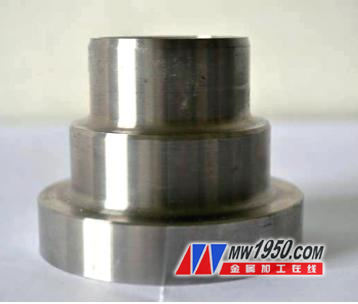
The general development trend of precision plastic processing is from the development of refined blanks to direct processing of parts. For the needs of cars and aerospace, the development trend of forgings is: 1 with light weight, thin and thick, with no cutting precision. 2 Improve process reliability and manufacturing flexibility of equipment. 3 Reduce the running tour of the equipment. Cold extrusion With the progress of precision plastic technology. Closed (occlusion) cold precision forging...
A forging machine is used to apply pressure to a metal blank to cause plastic deformation to obtain a forging having a certain mechanical property, a certain shape and size. One of the two major components of forging. By forging, it can eliminate the looseness of the as-cast state of the metal, weld the hole, and the mechanical properties of the forging are generally superior to those of the same material. For important parts with high load and severe working conditions in machinery, forgings...
Whatsapp: +86 16630869222
Address: ROOM 1207 NO.3 BUDING,YUECHENG APARTMENT,BATTLE ROAD,RENQIU CITY, Cangzhou, Hebei China
Privacy statement: Your privacy is very important to Us. Our company promises not to disclose your personal information to any external company with out your explicit permission.
Fill in more information so that we can get in touch with you faster
Privacy statement: Your privacy is very important to Us. Our company promises not to disclose your personal information to any external company with out your explicit permission.